



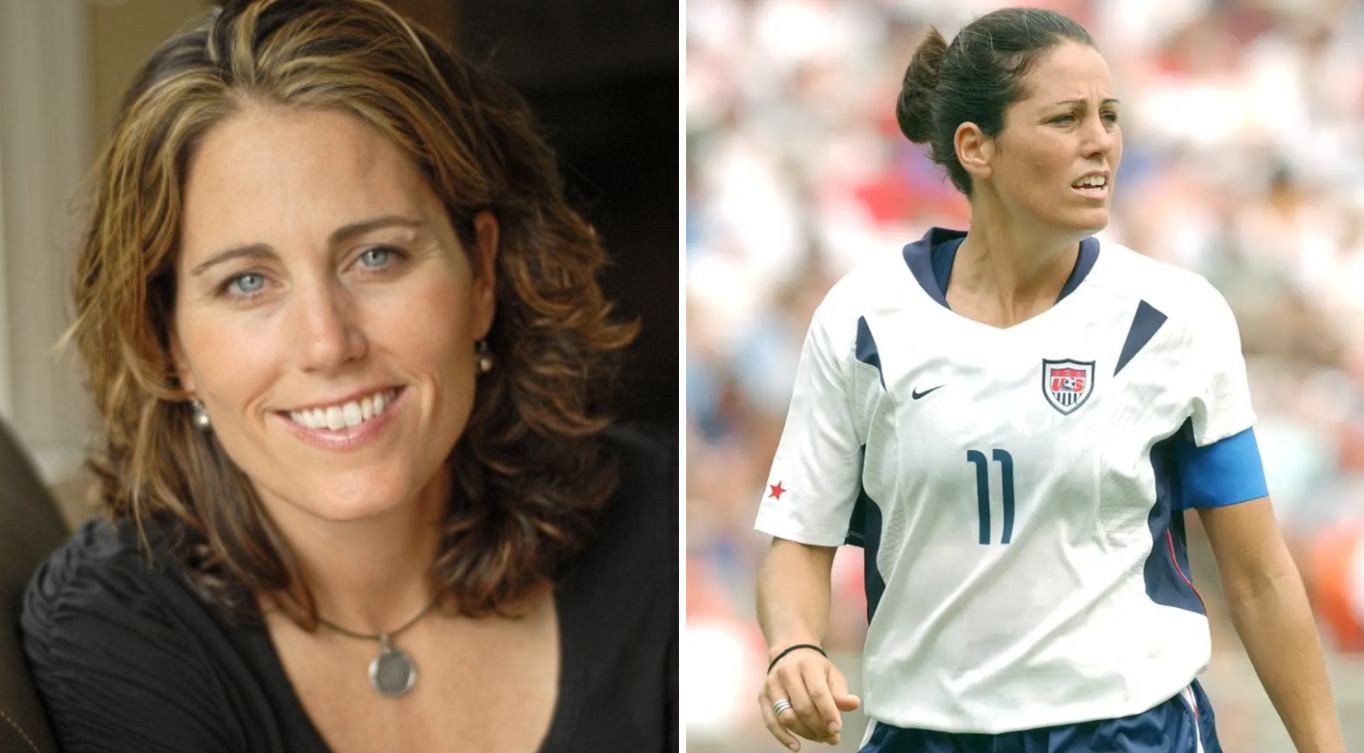
Julie Foudy is a former American soccer midfielder, longtime U.S. Women’s National Team captain, World Cup champion, Olympic gold medalist, and prominent sports broadcaster. Born on January 23, 1971, in San Diego, California, Foudy became one of the most recognizable players of the generation that helped establish women’s soccer as a major sport in the United States. Her international career lasted from 1988 to 2004, during which she represented the United States at four Women’s World Cups and three Olympic Games. The National Soccer Hall of Fame lists her with 272 full international appearances and credits her with two World Cup titles and two Olympic gold medals.
Foudy was more than a successful midfielder. She became known for her leadership, competitive spirit, intelligence and commitment to causes beyond the soccer field. She was a captain of the U.S. team during some of its most important years and was part of the historic 1991 World Cup-winning squad as well as the famous 1999 team that won the tournament on home soil. Her career eventually led to induction into the National Soccer Hall of Fame in 2007, confirming her place among the most influential players in American soccer history.
Julie Foudy at a Glance
| Category | Details |
|---|---|
| Full Name | Julie Maurine Foudy |
| Born | January 23, 1971 |
| Birthplace | San Diego, California |
| Position | Midfielder |
| U.S. Career | 1988–2004 |
| World Cup Titles | 1991, 1999 |
| Olympic Gold | 1996, 2004 |
| Olympic Silver | 2000 |
| Hall of Fame | 2007 |
Julie Foudy’s Early Life and Soccer Beginnings
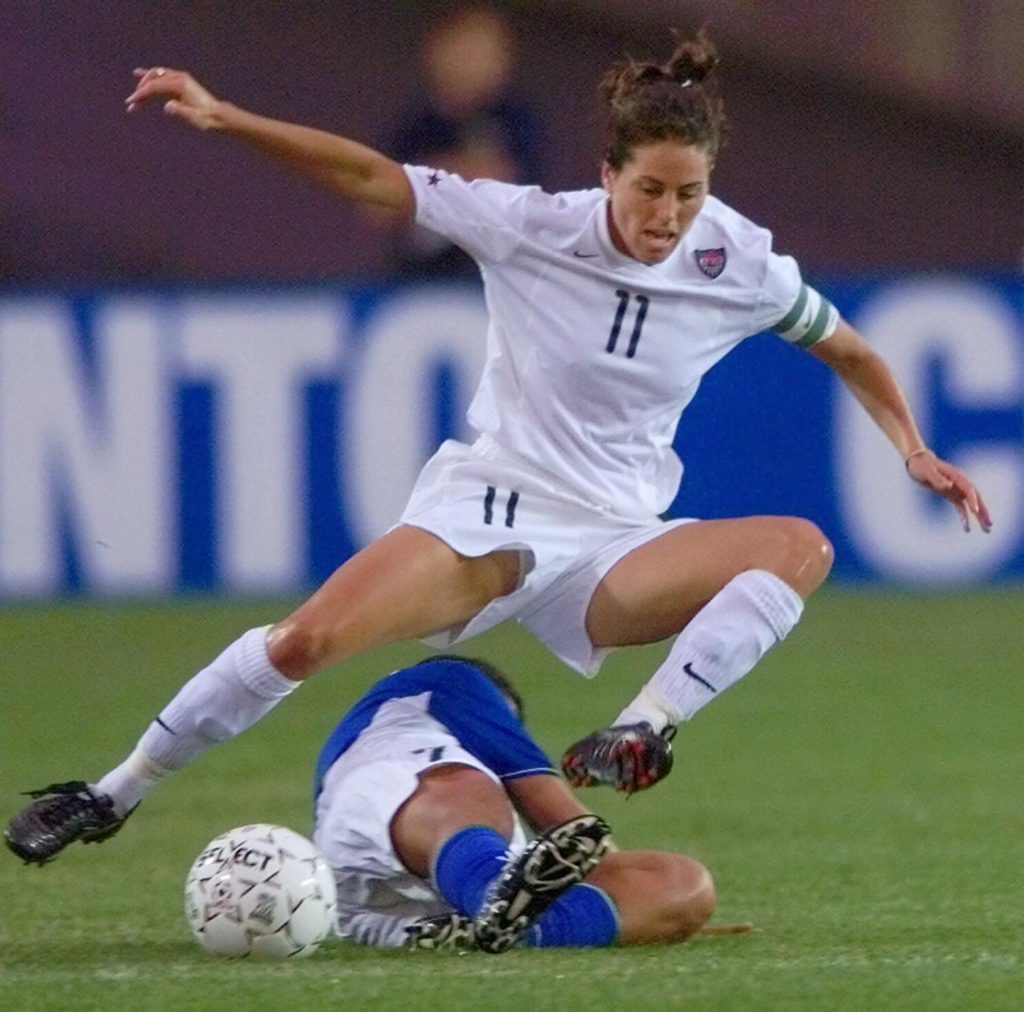
Developed her soccer skills in California and quickly emerged as a highly promising young player. She attended Mission Viejo High School, where her performances helped establish her as one of the country’s top young female soccer players. She later attended Stanford University, where she played college soccer and became a four-time All-American. Her college career helped prepare her for the demands of international competition and established her as an important player in the development of American women’s soccer.
Foudy’s international journey began at an unusually young age. According to the Society for American Soccer History, she made her U.S. national-team debut against France in 1988 when she was only 17. That experience helped introduce her to the international stage before the first Women’s World Cup was held in 1991. Foudy was subsequently selected for that historic tournament and became part of the American team that won the inaugural FIFA Women’s World Cup.
Julie Foudy’s U.S. National Team Career
Foudy’s national-team career lasted approximately 17 years, making her one of the most experienced players in U.S. women’s soccer history. She competed in the 1991, 1995, 1999 and 2003 Women’s World Cups, as well as the 1996, 2000 and 2004 Olympic Games. The National Soccer Hall of Fame states that she played in all 40 U.S. matches across those seven major tournaments. That level of consistency demonstrates how important she was to the national team over more than a decade.
Her international statistics are sometimes reported differently by reputable sources. The National Soccer Hall of Fame records 272 full internationals, while other respected soccer and Olympic sources list 274 appearances. Because of this discrepancy, articles about Foudy should identify the source when presenting her exact cap total rather than treating every published figure as identical. Olympedia, for example, records 274 caps and confirms her three Olympic medals.
World Cup and Olympic Achievements
One of the defining features of Julie Foudy’s career was her success in major international tournaments. She helped the United States win the Women’s World Cup in 1991 and 1999. The 1999 championship became especially memorable because the tournament was hosted in the United States and generated enormous attention for women’s soccer. Foudy was part of a generation that helped turn the national team into one of the most successful women’s soccer programs in the world.
Her Olympic record was equally impressive. Foudy won gold medals in 1996 and 2004 and a silver medal in 2000. The 1996 victory was particularly historic because women’s soccer made its Olympic debut at the Atlanta Games. Foudy later recalled the excitement surrounding that first Olympic tournament and the enormous significance it had for the players and the sport.
| Major Tournament | Result |
| 1991 FIFA Women’s World Cup | Gold |
| 1995 FIFA Women’s World Cup | Bronze |
| 1996 Olympics | Gold |
| 1999 FIFA Women’s World Cup | Gold |
| 2000 Olympics | Silver |
| 2003 FIFA Women’s World Cup | Bronze |
| 2004 Olympics | Gold |
Julie Foudy as a Captain and Leader
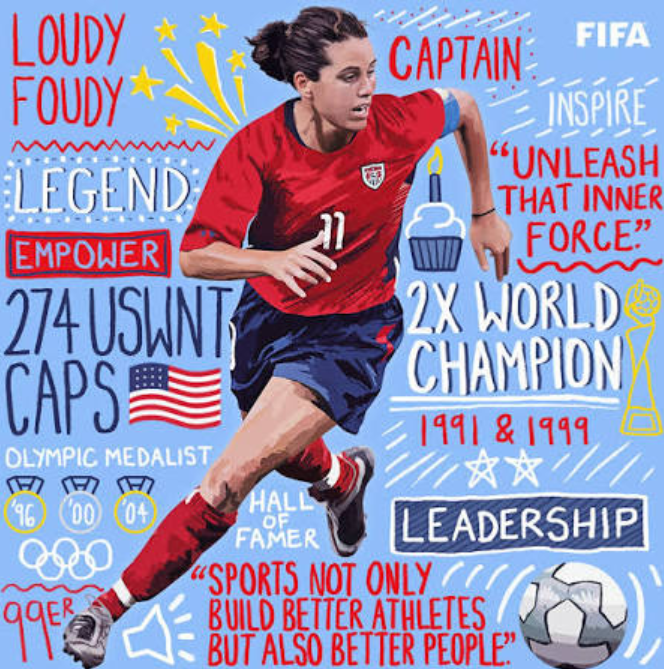
Leadership became one of the most important parts of Foudy’s identity. She served as a co-captain for much of the 1990s and became the team’s captain after Carla Overbeck’s retirement following the 1999 World Cup. She subsequently captained the United States at the 2000 and 2004 Olympics and the 2003 World Cup. Her long period of leadership made her an important voice inside a team filled with elite players.
Foudy has also continued to discuss leadership after retiring from competition. In an ESPN feature, she emphasized that leadership is something people actively choose rather than something that simply comes with a title. Her approach reflects the broader role she has taken since her playing career: encouraging young athletes to develop confidence, find their voices and make a positive impact.
Her Impact Beyond the Soccer Field
Foudy’s influence extends beyond trophies and statistics. In 1997, she received the FIFA Fair Play Award after drawing international attention to concerns surrounding child labor in the production of soccer balls in Pakistan. The Society for American Soccer History notes that she was the first American and first woman to receive the award. Her involvement demonstrated that her influence could extend to social issues connected with the sport she represented.
She also became involved in leadership development for young women. Foudy served as president of the Women’s Sports Foundation from 2000 to 2002 and later co-founded the Julie Foudy Sports Leadership Academy. The academy focuses on helping young female athletes develop leadership abilities, confidence, teamwork and other skills that can be useful both in sports and everyday life.
Julie Foudy’s Broadcasting and Media Career
After retiring from international soccer in 2004, Foudy successfully transitioned into broadcasting. ESPN reports that she made her debut as a studio analyst during the 1998 FIFA World Cup, while she was still an active player. She later became a regular voice on ESPN soccer coverage and joined the company full-time in 2005. In 2006, she became ESPN’s lead studio analyst for the FIFA World Cup in Germany and UEFA Euro 2008, becoming the first woman to hold that role for major international soccer events on U.S. television.
Her media career has included commentary, reporting, interviews and digital features. She has also used broadcasting to discuss women’s sports, leadership and equality. ESPN describes her as a leading voice for espnW, while her work has included coverage of major sporting events and the podcast Laughter Permitted with Julie Foudy. Her ability to explain the game while also discussing the broader issues surrounding athletes has helped make her influential well beyond her playing days.
Hall of Fame Legacy and Lasting Influence
Julie Foudy’s playing career earned her a place among American soccer’s most celebrated figures. She was inducted into the National Soccer Hall of Fame in 2007, only a few years after ending her international career. Her Hall of Fame recognition reflects not only her championships but also her consistency, leadership and importance to the development of the U.S. women’s national team.
Today, Foudy’s legacy can be seen in several areas: international soccer, sports broadcasting, women’s leadership and youth development. Her career demonstrates how an athlete can continue making an impact after retirement by using experience and visibility to support the next generation. From winning World Cups and Olympic medals to working in media and leadership education, Julie Foudy has built a legacy that reaches far beyond the soccer pitch.
Conclusion
Julie Foudy stands as one of the most important figures from the golden era of U.S. women’s soccer. Her 17-year national-team career included two World Cup championships, two Olympic gold medals and an Olympic silver medal. She also served as a captain during a crucial period for American women’s soccer and played in every major tournament for the United States between 1991 and 2004.
Her achievements did not end when she retired. Through broadcasting, leadership programs and advocacy for women in sports, Foudy has continued to influence athletes and fans. Her combination of sporting excellence, leadership and social impact explains why her name remains important whenever the history and growth of American women’s soccer are discussed.
Frequently Asked Questions
1. What is Julie Foudy famous for?
Julie Foudy is famous for her career with the U.S. Women’s National Team, including two FIFA Women’s World Cup titles, two Olympic gold medals and an Olympic silver medal.
2. How many World Cups did Julie Foudy win?
She won two Women’s World Cup titles, in 1991 and 1999.
3. When was Julie Foudy inducted into the Hall of Fame?
Julie Foudy was inducted into the National Soccer Hall of Fame in 2007.
4. What does Julie Foudy do now?
Foudy has built a career in sports media and leadership development. She has worked as an analyst and reporter for ESPN and has been involved with the Julie Foudy Sports Leadership Academy.
